










A rally you shouldn’t buy
Why the rise of the S&P 500 isn’t a reason for optimism
SP500
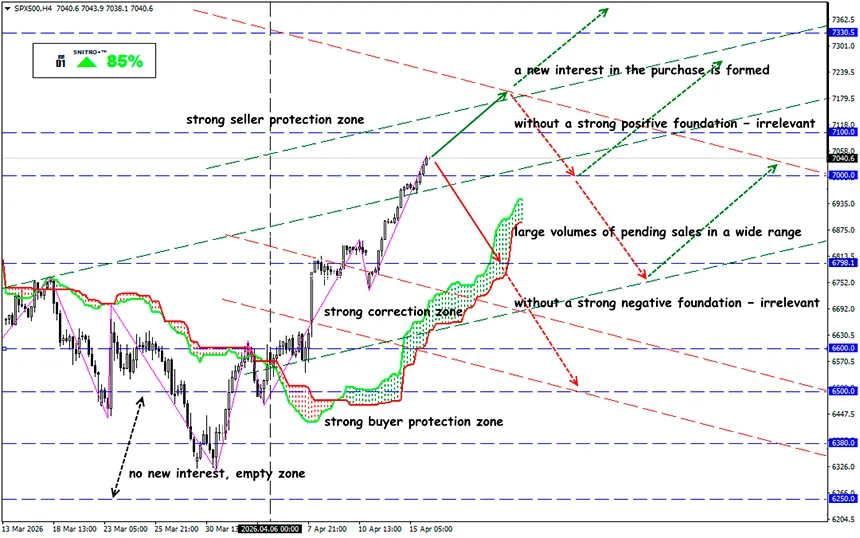
Key zone: 7,000 - 7,100
Buy: 7,150 (on a decisive break of the 7,100 level); target 7,350-7,400; StopLoss 7,100
Sell: 6,950 (on strong negative fundamentals); target 6,700-6,650; StopLoss 7,020
The S&P 500 index has, for the first time in history, firmly broken above the 7,000 mark, closing on April 15 at 7,022.95. Nasdaq gained nearly 1.6%, reaching a new high since October of last year. Since the end of March, the market has risen by more than 10% in just ten trading sessions — despite the blockade of the Strait of Hormuz and oil trading above $100.
At first glance, this looks like a classic rally. But under current conditions, the move appears abnormal.
Such accelerated trends have occurred before: since 1950, the S&P 500 has gained 10% over 10 sessions 21 times. However, this almost always happened during recoveries after deep corrections, when the market was oversold. That base is missing now — the index hasn’t even declined 10% from its peak.
Moreover, the growth is highly uneven. Since the March 30 low, the seven largest tech companies have gained about 18%, while the remaining 493 stocks in the index have risen no more than 8%. This is not a broad market move but a narrow impulse concentrated in expensive stocks.
Additional pressure comes from the bond market. The yield on 10-year U.S. Treasury bonds stands at 4.28% — higher than at any point during the post-2008 recovery rally. Bonds are once again becoming a competitive alternative to equities.
Historical experience shows that new highs during geopolitical instability and elevated valuations rarely end well for those buying at the top.
Political factors also played a role. Despite the lack of a final resolution to the Middle East conflict, temporary limits on military actions and active statements by Donald Trump triggered a sharp short-covering rally.
According to Goldman Sachs, hedge funds were holding record short positions in U.S. equities. After news of a temporary truce with Iran, aggressive position unwinding began: in just one week, short positions in equity ETFs dropped by 11.5% — the fastest pace in over a decade. This was the key driver of the current rally.
Meanwhile, the fundamental backdrop remains tense.
- Inflation risks persist: oil prices remain high, and the Fed is not ready to cut rates or restart QE. Liquidity remains constrained.
- March inflation data came in below expectations, but expectations themselves were elevated, amplifying algorithmic trading reactions.
- Risks in the tech sector are rising: reduced investment from Middle Eastern countries could affect 30–50% of the 16 GW of data center capacity planned for launch in the U.S. in 2026. This creates risks for equipment manufacturers, including market leaders, and for the entire
AI industry, which has been a key market bet.
The current stock market dynamics do not indicate stability. This is not healthy growth but a combination of a short squeeze, narrow capital concentration, and temporary easing of geopolitical pressure.
The market is showing strength against weak fundamentals. The rally is speculative in nature and driven by technical factors rather than sustainable demand. In the short term, new highs are possible, but the probability of a return to this year’s lows remains high.
The balance of risks is tilted to the downside, and current levels require increased caution.
So we act wisely and avoid unnecessary risks.
Profits to y’all!