










The Price Is Falling on Hawkish Signals from the Monetary Regulator
Gold Does Not Trust the Fed
XAU/USD
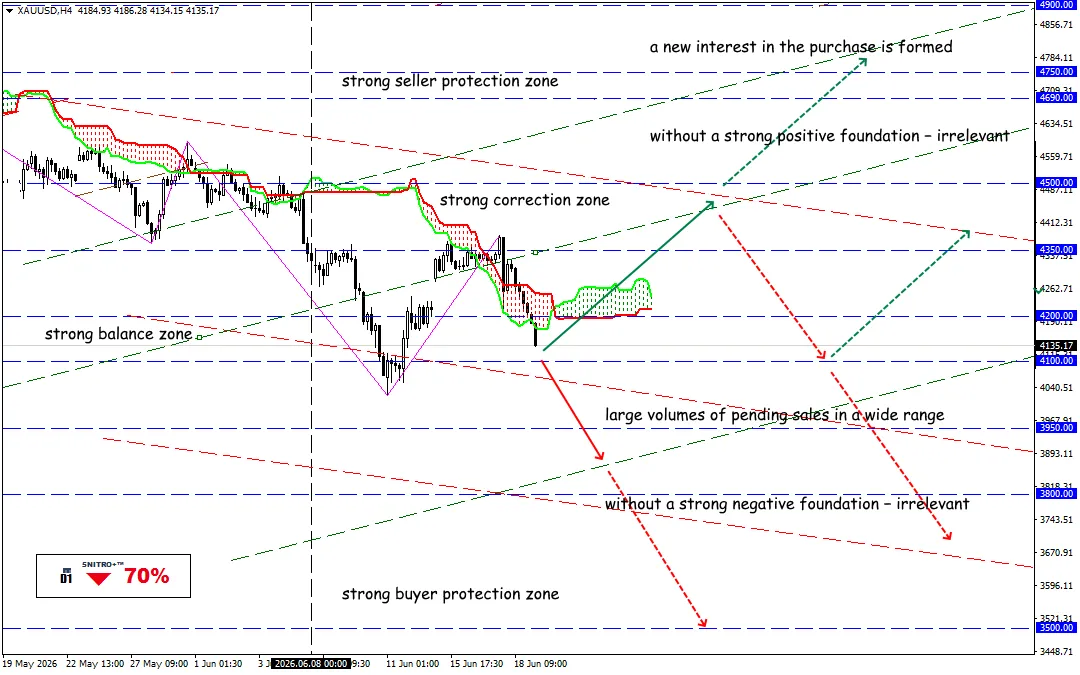
Key zone: 4,100.00 - 4,300.00
Buy: 4,350.00 (on a decisive break above 4,300); target 4,500-4,750; StopLoss 4,280.00
Sell: 4,000.00 (against a strong negative fundamental backdrop); target 3,750-3,600; StopLoss 4,070.00
The U.S. dollar reached a one-year high amid expectations of a Federal Reserve rate hike. The market estimates the probability of a U.S. rate increase in December at 87%. Gold is ending the trading week with yet another decline.
Gold is losing support from interest rate expectations. The past few months have been challenging for the precious metals market. First, the war in the Middle East drove energy prices higher and intensified inflation concerns. Then the Fed left rates unchanged, but the regulator’s rhetoric became noticeably more hawkish.
Reminder:
Gold typically loses attractiveness when interest rates are high: the higher the yield on cash instruments, the less attractive a metal becomes when it does not generate interest income.
- The rise in gold prices following the U.S.-Iran agreement was short-lived. U.S. gold futures for August delivery also fell by 1.7%, making gold more expensive for holders of other currencies.
- Mainland China and Hong Kong markets were closed due to the Dragon Boat Festival, reducing the activity of major market participants. However, the strengthening U.S. dollar and tighter Fed policy continue to weigh on the precious metals market.
- In India’s physical market, demand for gold was modest this week due to prices falling to a two-and-a-half-month low and remaining volatile, while China shifted to discount pricing.
The overall negative trend was reinforced by Goldman Sachs, which lowered its gold forecast by another $500. The bank now expects gold to trade around $4,900 per ounce by December. Gold still retains upside potential, but it is expected to be much more modest than previously assumed.
Goldman Sachs also believes that one reason for revising its forecast was the deterioration in prospects for inflows into gold ETFs.
If the Federal Reserve shifts from rate cuts to rate hikes, demand for gold as a hedge against macroeconomic risks could decline significantly. Under such a scenario, analysts allow for a drop to $4,400 per ounce by the end of the year.
And what is the result?
The primary source of support for gold remains the central banks of leading countries.
Even according to preliminary estimates, global central banks will purchase about 50 tons of gold per month this year and around 40 tons per month next year. Demand from the official sector remains the key structural argument in favor of gold.
At the moment, the fundamental backdrop is entirely negative for gold. The speculative positions accumulated above key levels are persistently demanding liquidation, meaning that any, even the most insignificant, geopolitical or economic factor can be used to trigger Stop Loss orders without reversing the medium-term trend.
So we act wisely and avoid unnecessary risks.
Profits to y’all!